top of page
_PNG.png)
MALZONE
_PNG.png)
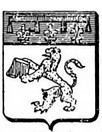
The House of Malzone is a member branch of the House of Calzoni di Bologna, ancestrally noble members of the Royal Court of the Duchy of Milan. The seat of the family remains at the palace at Corso Venezia 29 in Milan. This family, whose origins trace back centuries in Bologna, is known for its industrial engineering prowess. Sprouting one of Europe's largest industrial engineering companies of the 19th and 20th Centuries, The Calzoni Company. With projects that touch every corner of the globe, from hydropower plants in Peru, nuclear fusion in South Korea, turbines in Zambia, and weapons systems in the Italian Navy. The company has since been sold and is now a division of the US-based company L3 Harris. Aside from the family's notable contribution to Italian industry, the family and its branches in Italy, Brazil, and the United States have had many notable members such as Grand Chancellor to the Duke of Mantua Gabriele Calzoni, Podesta of Brescia Pietro Calzoni, Industrialist Alessandro Calzoni, automotive and racing legend Rino Malzoni, and Hall of Fame baseball player, Frank Malzone, to name a few. The earliest branches of the family date back to at least the 15th Century, at the height of the Italian Renaissance. Branches of the family migrated to the New World in the mid 1800s, when the Malzoni branch purchased large areas of land outside of São Paulo, Brazil, to grow coffee. That company later grew in the region to become a major producer and exporter of coffee, grains, and sugar. Around the same time, the Malzone branch came to Chicago, as many did at the time for the Chicago World's Fair of 1893. Chicago was the heart of American innovation and expansion westward at the time. The family settled on the south side, which at the time was the center of the political and industrial influence of the city. There, the family started in the grocery business, which was lucrative, being just outside the Chicago Union Stockyards, which processed, packed, and distributed massive portions of America's meat, at its peak producing roughly 80% of the meat that would go on to feed America's rapidly growing population at the turn of the century. Today, all branches of the family in recent generations no longer operate in the industries that built their family name, and Italy abolished titles of nobility in 1948; however, their legacies live on in museums and history books. "It is a great honor and privilege to explore the lineage that planted the seeds to my family tree. IT is my wish that that tree may continue to be the shade to many, the seed to the new, and strong from its roots." - Tony Malzone
bottom of page